Posts

Showing posts with the label corrosion testing

How to Use Concrete Moisture Meter More Efficiently?

Tools and machines are an integral part of any production company and being a professional, you must know that if you don’t handle your machine well, you will end up making it a trash in a short span of time. So, if you deal with Concrete Moisture Meter and you want to increase its efficiency, you must take care of it and handle it with care. Rusted and brittle machines never give the performance that you require. In order to increase the efficiency and lifespan of your machines and tools here are the few tips that you can use and ensure long life and better functioning of the Concrete Moisture Meter (CMM). Scroll down and check out the few important tips. Modern tools including concrete moisture meters are commonly used in various industries and when handles roughly, it stops working properly. So the first thing you must do is keep the Concrete Moisture Meter safely in its case after you are done with the work. It helps in keeping the meter away from the dust, pollen and spore...
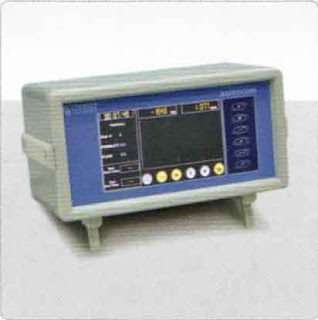
What Do You Mean By Concrete Corrosion?

Concrete corrosion pertains to the degradation that occurs within and outside the material. Concrete can degrade due to various reasons, usually due to material limitations, construction methods, the design, and constant exposure to severe conditions. Structural, functional, and aesthetic problems may occur due to fire damage, effects of sea water, aggregate expansion, calcium leaching, bacterial corrosion, chemical damage, and physical damage. Corrosion of concrete can lead to widespread damage to critical assets and structures, like bridges and sewage pipelines. Preventative measures like coatings (i.e. lacquer or oil-based paint and varnish), surface treatment, and better construction methods are utilised to help prevent and combat these types of corrosion. The production technique of cements can be improved to prevent damage, too. Corrosion would usually be too late to remedy the problem once signs of damage occur on the surface. Hence, specialists rely on advanced testin...

How to Use a Crack Measuring Device

Using a crack measuring device is one way to determine the overall integrity of a material like concrete. There different crack measuring devices are available to ensure proper measurement and accurate data collection. A good crack measuring device should be able to help you diagnose problems with concrete, so you can think of the most appropriate ways to remedy them. Here are ways to use some commonly used crack measuring devices : Digital position strain gauge deformation meter This device has a digital dial gauge attached to a bar. A conical point is fixed and mounted at one end of the bar, while the moving conical point is on a knife edge pivot on the other side. Pre-drilled stainless steel discs, are attached to the structure with an appropriate adhesive, are positioned using the setting bar. The gauge's conical points are inserted into holes in the discs when a reading is required, and the dial gauge's strain measurement is noted. This way, strain changes occu...

Information about Ultrasonic Pulse Velocity Test

Ultrasonic Pulse Velocity (UPV) testing of concrete elements is useful to evaluate quality and consistency of concrete, along with locate regions of bad consolidation, honeycombing or delamination due to corrosion. It is also possible to measure the depth of perpendicular cracks in the concrete. UPV testing measures the time of transit of an ultrasonic pulse between two test points. The pulse velocity is calculated upon the direct distance between the two test points. This velocity value is related to a number of material properties of concrete including the density and elastic modulus. There will also be a reduction in pulse velocity if there is damage to the concrete being tested or regions of bad consolidation. Conventionally UPV testing uses P wave transducers, that is it sends and receives compression waves. Shear wave transducers are also available, S waves are more slowly transmitted. Where P&S wave testing on lab samples is combined with measuring the density of a...

Soil Testing – Ensure the Quality before Using

Soil analysis is an important aspect of every construction project, and it is usually conducted before construction starts. The quality of the soil in your construction site will be crucial to the stability and longevity of the structure that you are planning to build. Hence, you must conduct proper soil testing using the most reliable equipment. Soil testing can help you assess the ground's suitability and provide you with important data for making informed decisions. High-quality soil testing devices can examine the geotechnical and chemical properties of the soil. This way, you can determine the soil's suitability for handling a structure and determine whether it is safe to build on it. Using a reliable soil testing device can let you identify the different types of soil on the site and where they are found. Some testing devices will determine the density, compaction, strength, sand content, contamination, and organic content in the soil, and assess if they will ha...

Know More about Concrete Testing Equipment

Image
Cement and concrete testing helps assure compliance with quality assurance aspects like mix designs, production control, and efficient materials usage, which are largely dependent upon the quality of cementitious mixtures. There is an extensive range of testing methods and techniques that can be carried out to determine concrete quality and suitability, which is why it is critical to find the correct design and tool for the physical testing of these products. Concrete testing tools are varied and some are specifically designed for testing different characteristics and qualities of cement and concrete, ranging from permeability to soundness, specific gravity, consistency, expansion limit, and other physical as well as chemical aspects of materials. Vibrating table – A vibrating table tests the flexural or compressive strength of cement and concrete, which is essential if you want to achieve a more consistent mixture. The come in different sizes and table to...