Posts

Soil Testing – Ensure the Quality before Using

Soil analysis is an important aspect of every construction project, and it is usually conducted before construction starts. The quality of the soil in your construction site will be crucial to the stability and longevity of the structure that you are planning to build. Hence, you must conduct proper soil testing using the most reliable equipment. Soil testing can help you assess the ground's suitability and provide you with important data for making informed decisions. High-quality soil testing devices can examine the geotechnical and chemical properties of the soil. This way, you can determine the soil's suitability for handling a structure and determine whether it is safe to build on it. Using a reliable soil testing device can let you identify the different types of soil on the site and where they are found. Some testing devices will determine the density, compaction, strength, sand content, contamination, and organic content in the soil, and assess if they will ha...
Advantages of the Ultrasonic Pulse Velocity Test

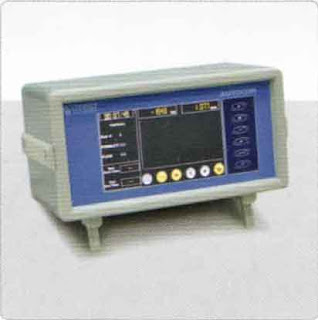
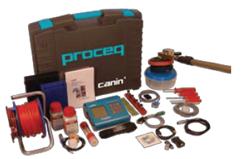
Ultrasonic pulse velocity testing is a revolutionised non-destructive testing which can be applied on various structures. Concrete testing equipment that uses ultrasonic pulses provides faster and more accurate result. Moreover, the test can be conducted without causing any destruction or damages to the concrete element. Using an ultrasonic pulse velocity test may help save money and time at the same time because it eliminates the need to test, break, and throw away hundreds of cylinders and cubes. In an ultrasonic pulse velocity test, the material's pulse velocity is determined by the material's density and elastic properties, both of which are related to the material's strength and quality. High-quality ultrasonic pulse equipment enables a reliable and more accurate way to determine the internal properties of materials. Hence, it is useful for determining a material's homogeneity and for detecting the presence of cracks, defects, voids, and other imperfectio...

Know More about Concrete Testing Equipment

Image
Cement and concrete testing helps assure compliance with quality assurance aspects like mix designs, production control, and efficient materials usage, which are largely dependent upon the quality of cementitious mixtures. There is an extensive range of testing methods and techniques that can be carried out to determine concrete quality and suitability, which is why it is critical to find the correct design and tool for the physical testing of these products. Concrete testing tools are varied and some are specifically designed for testing different characteristics and qualities of cement and concrete, ranging from permeability to soundness, specific gravity, consistency, expansion limit, and other physical as well as chemical aspects of materials. Vibrating table – A vibrating table tests the flexural or compressive strength of cement and concrete, which is essential if you want to achieve a more consistent mixture. The come in different sizes and table to...

Uses of Half Cell Potential Field Measurement Equipment

Image
Corrosion potential mapping is used to identify rebar spots that are undergoing corrosion. It is a non-destructive technique carried out on concrete structures in order to determine corrosion status related to the identified corrosion potential value. The contours and measurements obtained by using plotting potential corrosion values are also significant in delineating corroding portions of structures from "healthy" non-corroding portions. The half-cell, open circuit potential test method is a more frequently used technique for potential corrosion mapping, although double-probing is also applicable. The half cell testing method is suitable for on-site (in-situ) evaluation as well as for research and development work. It applies to concrete members regardless of size or depth of covers over reinforcing steel.  Half-cell circuit potential testing and measurement can also be used any time during the lifespan of a concrete member. It is an inexpensive test method that i...

Things to Know about Concrete Strength Test

There are several ways to test the strength of hardened concrete. Some tests are completely non-destructive while some are slightly destructive, leaving small holes that can easily be patched. Individuals performing concrete strength tests must be qualified and have appropriate certifications stipulated by the ASTM standard test methods. The easiest and most common strength test for concrete involves making a cylinder fresh and consolidated concrete and testing the hardened sample a specified age. A common requirement for casting concrete strength specimens is that moulds should be cylindrical, with a height to diameter ration of 2 is to 1. Moulds used to form concrete test cylinders vertically should conform to ASTM C470. Conforming to size and ratio standards is important to ensure accurate lab test results. The second most common type of concrete strength testing uses beam specimens that are hardened in a horizontal position instead of a cylindrical form. Beam specimens are commo...

Advantages of Universal Testing Machine

The main advantage of investing in a universal testing machine is that the device can be used to test the strength, durability, and suitability for most any material. A universal testing machine has the capability to pull, compress, bend, or stretch material to its breaking point. It is primarily used by laboratories that manufacture and or mould different types of plastics. A universal testing device features one or two vertical columns mounted on a base. A second horizontal plate contains attachments that are used to hold the sample and slides up and down during stress testing samples. Dual vertical column machines are preferred by most laboratories as they can handle larger samples in terms of size and weight. Determining tensile strength is the most common test performed in a universal testing machine. This is done by holding one end of a sample in place while the other is pulled away until two sides are torn apart. The same process is used for testing flexural str...

Effective Tools Used To Test Your Building Strength

Image
The type of tools you will need to test the concrete structure largely depends on the types of tests or evaluations you need to meet building standards and follow common construction practices. The following are some of the most common testing ways used by testing services, engineering firms, developers, and builders whenever building or testing: •    The Rebound Hammer Test – This test is performed to estimate the compressive strength of concrete using a rebound hammer. The rebound produced by aspring-loaded mass depends on how hard the stricken surface is. When the plunger of a rebound hammer is pressed against concrete, the mass, which is spring-controlled, rebounds—the extent of which depends on the hardness of the surface. The rebound value is taken and read from a graduated scale designated as the rebound index. This can be read directly from a graph on the body of the rebound hammer. •    The Core Cutting Test – This test is a partially ...